

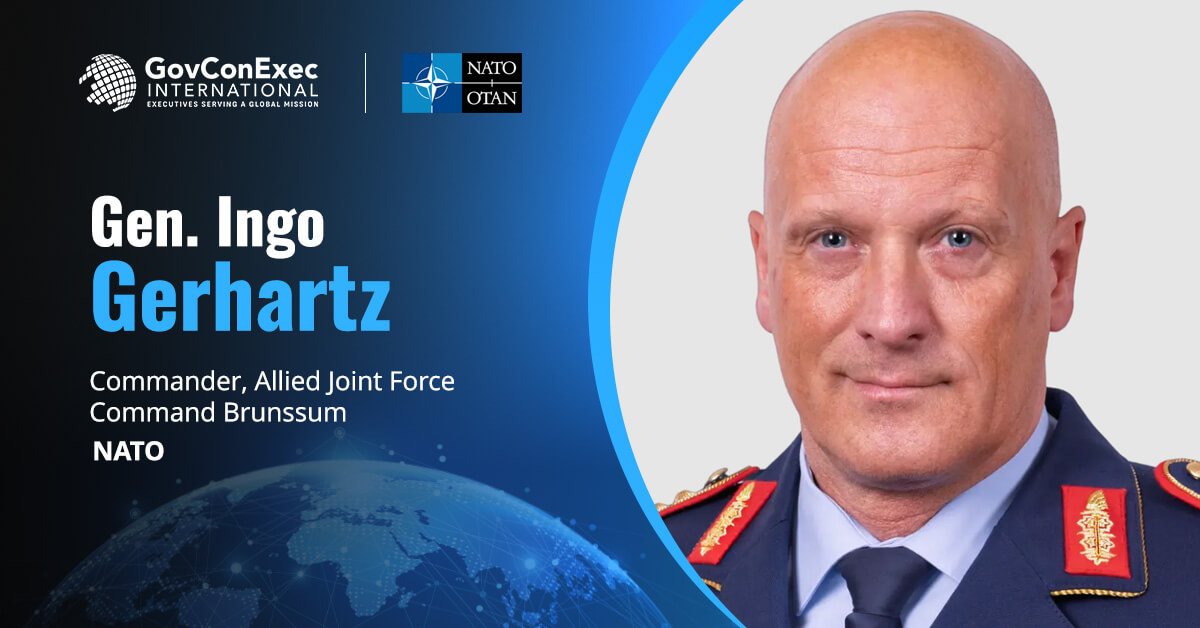
NATO and its European partners must step up investments in counter-unmanned aerial systems as Russian drone incursions test the alliance’s defenses, according to Gen. Ingo Gerhartz, commander of NATO’s Allied Joint Force Command Brunssum.
Speaking at the Warsaw Security Forum, Gerhartz pointed to recent incursions into Poland, Romania and Estonia, which France, Germany and Poland have condemned as “reckless, hostile acts.” He said the alliance should avoid relying on cheap drones or costly missile interceptors alone, and instead adopt a multi-domain approach that includes affordable sensors and effectors.
From drones to digital threats, homeland security is evolving fast. Don’t miss the Potomac Officers Club’s 2025 Homeland Security Summit on Nov. 12. Reserve your spot today.
The commander also underscored the importance of NATO’s Eastern Sentry effort, which is expanding the alliance’s air defense posture along its eastern flank with systems from member nations. “Putting more assets in there, more fighters … gives us a good feeling,” said Gerhartz. “It signals that NATO and the countries can react. But we need other equipment, even more. We need low-cost sensors. We need low-cost effectors.”
At the same event, retired U.S. Army Europe commander Lt. Gen. Ben Hodges warned that NATO is still not “mentally prepared” for the prospect of daily Russian drone strikes.
Gerhartz’s call reflects broader concerns across the region. Lithuanian Defense Minister Dovile Sakaliene, in a recent meeting with her Spanish counterpart, emphasized strengthening Baltic air defenses to counter Russian threats.