
- CSIS’ Jerry McGinn and Celia Barrie recommend deeper U.S.-allied defense industrial partnerships
- European NATO countries and Canada have raised defense spending by more than 50 percent since 2022
- About 70 percent of defense-related orders from Asia-Pacific allies are sourced externally
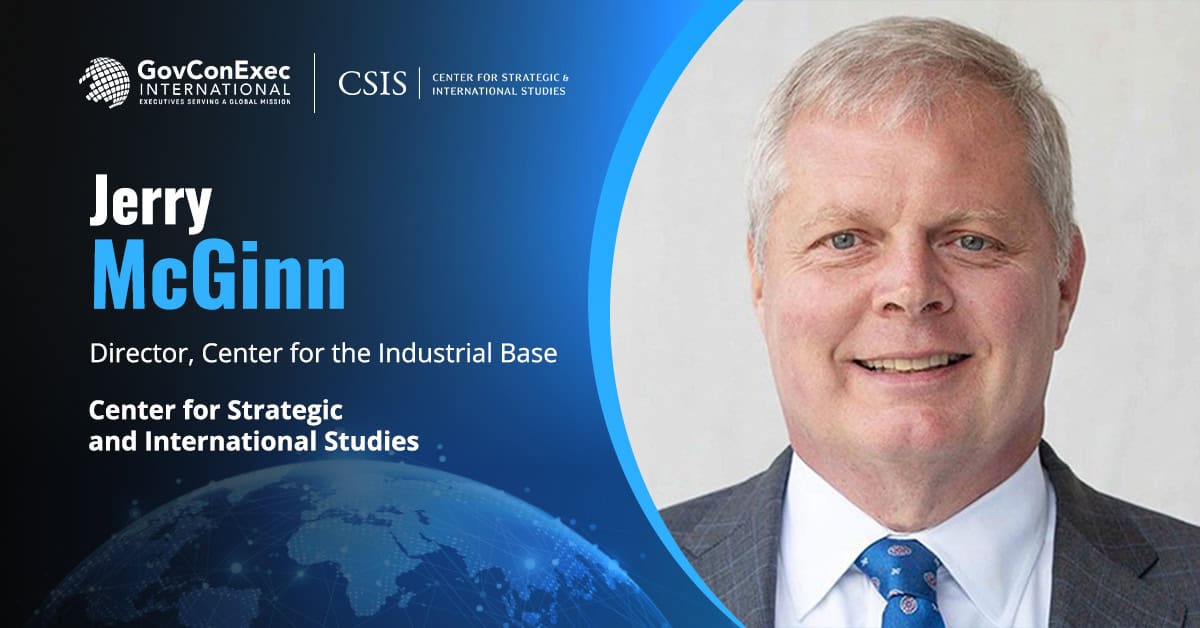
Jerry McGinn, director of the Center for the Industrial Base and senior fellow in the Defense and Security Department at the Center for Strategic and International Studies, said U.S. allies are raising defense spending and pursuing greater industrial cooperation as governments reassess their defense needs, according to a report published Tuesday.
McGinn, a three-time Wash100 Award winner, co-authored the report with Celia Barrie, a research assistant at CSIS’ Center for the Industrial Base.
How Are European Allies Building Defense Capacity?
European NATO countries and Canada have raised defense spending by more than 50 percent since 2022, according to the report. Poland, the Baltic states and Scandinavian countries recorded gains of 71 percent, 134 percent and 126 percent, respectively.
European governments are also pursuing domestic production and joint procurement initiatives. The European Defence Industrial Strategy seeks to strengthen defense manufacturing and supply chains, while the Security Action for Europe program provides loans for defense investment.
Those efforts have not eliminated Europe’s reliance on U.S. defense systems and global supply chains, according to McGinn and Barrie. NATO members placed more than 200 defense-related orders with the U.S. from 2022 to 2025.
How Are Asia-Pacific Allies Building Defense Capacity?
McGinn and Barrie said Asia-Pacific allies face a need to develop stronger regional defense-industrial ties while continuing to rely on suppliers outside the region. About 70 percent of defense-related orders placed by allies in the region are sourced externally, according to the report.
Several countries have also committed more resources to defense. Japan’s military expenditure has risen nearly 60 percent since 2015, while Singapore, Taiwan and Indonesia recorded gains of about 49 percent, 56 percent and 83 percent, respectively.
The authors cited AUKUS and the Partnership for Indo-Pacific Industrial Resilience as examples of regional industrial cooperation. They said allied burden sharing also requires the ability to manufacture munitions, sustain weapons systems and maintain critical supply chains.
McGinn and Barrie recommended that the U.S. pursue more coproduction, licensed manufacturing, technology sharing and industrial partnerships with allies.