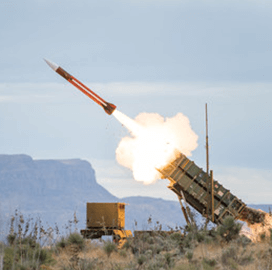

United Shipbuilding Corp., a Russian shipbuilding conglomerate, is equipping Moscow’s Yasen-class nuclear-powered submarines with Zircon hypersonic cruise missiles. USC CEO Alexei Rakhmanov disclosed the ongoing work in an interview with the state-owned RIA Novosti news agency. Russia previously said the Zircon missile can travel at 7,000 mph, allowing it to survive the air defenses of...
Author: Kristen Smith (Kristen Smith)
FBI Probes Chinese Company Over Potential CFIUS Violation
The FBI has launched an investigation into Huafon’s potential violation of a national security agreement with the Committee on Foreign Investment in the United States in connection with the Chinese chemicals company’s acquisition of DuPont’s biomaterials business. CFIUS approved the $240 million acquisition deal, which was finalized in May 2022, with the condition that Huafon...
NZ Eyes Increased Pacific Presence Under New National Security Strategy
New Zealand will increase information sharing with its partners in the Pacific and create a new Pacific national security and intelligence coordinator role as part of its newly released strategy that aims to address security challenges and establish a greater presence in the region. The National Security Strategy was published along with a Defense Policy...
East Asia Trip Underscores US Commitment to Partnerships on Nuclear Security
National Nuclear Security Administration Principal Deputy Administrator Frank Rose met with Japanese officials in mid-July to discuss nuclear security issues, geopolitical challenges and Russia’s ongoing military aggression against Ukraine. In a meeting with Kano Koji, Japan’s defense policy chief, Rose said the United States created a strategy document meant to address security threats. He highlighted...
Tunisian Air Force Receives First Delivery of Textron Next-Generation Military Trainer
Textron Aviation Defense has delivered the eighth Beechcraft T-6C Texan II military training aircraft to the Tunisian Air Force under a Foreign Military Sales contract. The aircraft arrived at Sfax Air Base following a one-month training of Tunisian pilots on the T-6C Texan II in the United States. Participants learned about flight controls, general handling...
Sweden to Join NATO Fund for Disruptive Tech Startups
Sweden has expressed its intent to participate in the NATO Innovation Fund, which will invest $1.1 billion in early-stage startups developing emerging and disruptive technologies that can address critical defense and security challenges. The country, which is on track to be the 32nd NATO ally, will officially join the alliance following accession talks. Pal Jonson,...
New Security Center in Australia Provides More Data Access to US Allies
The United States has established a new mission partner environment in Australia, allowing allied countries to have access to all information they need to conduct operations in various domains. The Combined Joint Network Operations Security Center enabled sharing of communications, targeting and other data among military personnel from 13 Indo-Pacific countries that participated in the...
Turkish Aerospace Industries to Supply Indonesia With 12 Anka Drones
The Indonesian Ministry of Defense has awarded Turkish Aerospace Industries a contract for 12 Anka drone units for Indonesia’s air force, army and navy forces. The medium-altitude, long-endurance unmanned aerial vehicle can reach altitudes of up to 29,000 feet and offers up to 30 hours of flight time. The delivery of the reconnaissance drones, expected...
Analysts: Chips From Western Countries Found in Russian Military Equipment
New KSE Institute analysis revealed that Russian military equipment uses chips from Western countries, despite these nations implementing sanctions and export controls to cut Russia’s access to their semiconductors. According to a CNBC report, the Kyiv-based think tank identified over 1,000 foreign-made components in 58 Russian military weapons, vehicles and other equipment recovered in Ukraine...
Defense Analysts See Increasing Defense Deals Between Non-US Companies, Arab Countries
U.S. export controls, the political stance of the U.S. government and the emergence of new defense companies are seen affecting the sale of American weapons to Arab countries, including the United Arab Emirates and Saudi Arabia. According to a U.S. defense industry source, non-U.S. companies seem to have dominated defense deals in the region. Another...