

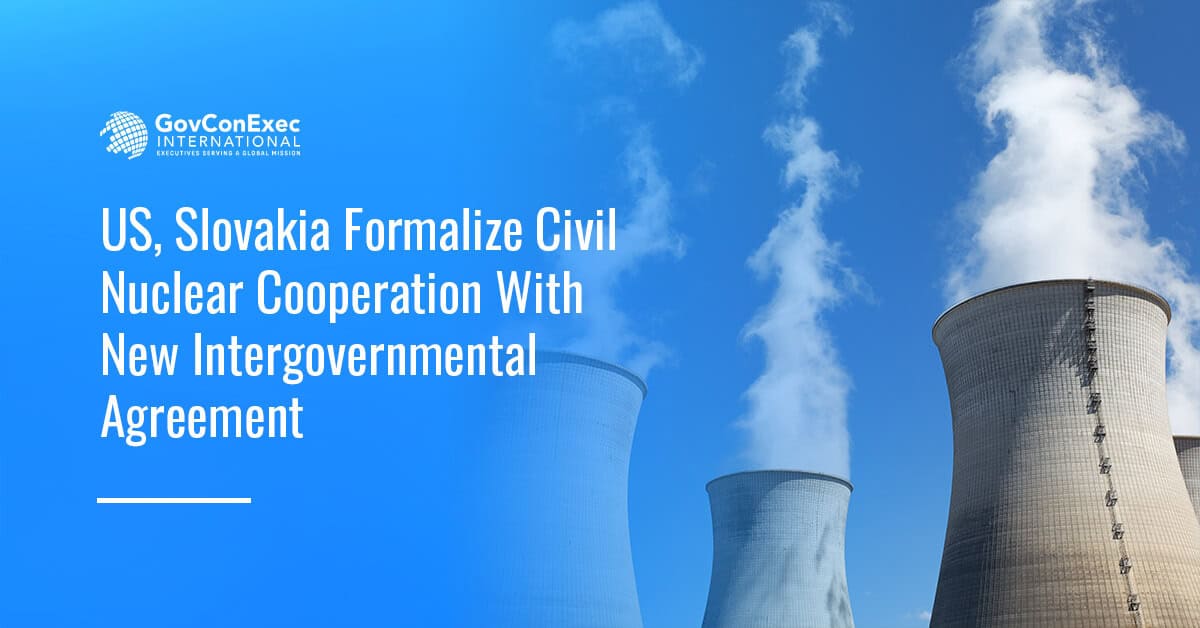
The United States and Slovakia have formalized a new civil nuclear partnership through the signing of an intergovernmental agreement to expand nuclear energy cooperation and support long-term energy security in Central Europe.
U.S. Energy Secretary Chris Wright and Slovak Prime Minister Robert Fico signed the agreement, establishing a framework for collaboration on Slovakia’s civil nuclear power program, the Department of Energy said Friday. The agreement centers on plans to develop a new, state-owned American nuclear unit at the Jaslovské Bohunice Nuclear Power Plant using American reactor technology.
What Does the US-Slovakia Agreement Cover?
Under the agreement, the two countries will cooperate across multiple aspects of civil nuclear development, including reactor technology deployment, nuclear fuel supply chains, safety and security practices, workforce training and long-term project planning.
The planned nuclear unit is expected to have a capacity of approximately 1,200 megawatts electric and represents one of the largest infrastructure investments in Slovakia’s history.
The initiative also aligns with broader U.S. efforts to expand the global footprint of domestic nuclear technology and reinforce supply chains that support reactor construction, fuel services and advanced manufacturing.
How Does the US-Slovakia Project Affect Energy Security?
Slovakia currently relies in part on Russian-designed reactors for electricity generation. The new project is intended to help diversify the country’s nuclear fleet and reduce long-term dependence on legacy systems.
“Today’s civil nuclear agreement reflects our shared commitment to strengthening European energy security and sovereignty for decades to come,” said Wright. “By deploying America’s leading nuclear technology, we are creating thousands of good-paying American jobs, expanding global markets for U.S. nuclear companies, and driving economic growth at home.”
Commenting on the partnership, Fico described the agreement as “a clear signal that Slovakia and the United States are united by a common strategic thinking about the future of energy – about its safety, sustainability, and technological maturity.”
How Does the US-Slovakia Agreement Fit Into DOE’s Broader Nuclear Strategy?
The agreement comes as the DOE continues to expand federal investment in nuclear research, workforce development and supply chain resilience.
Over the past years, DOE has announced tens of millions of dollars in funding for nuclear technology research and development, university-led reactor projects and simulation-based reactor modeling efforts. The department has also taken steps to strengthen domestic nuclear fuel production and advisory oversight by establishing a new consortium and appointing new committee members.