
- Samsung Electronics and SK Hynix plan to invest more than $500 billion in a new chip manufacturing hub in southwestern South Korea
- The government-backed initiative calls for four new memory chip plants to diversify production beyond the Seoul region
- The project is part of South Korea’s broader megaproject agenda covering semiconductors, AI data centers and AI-driven robotics
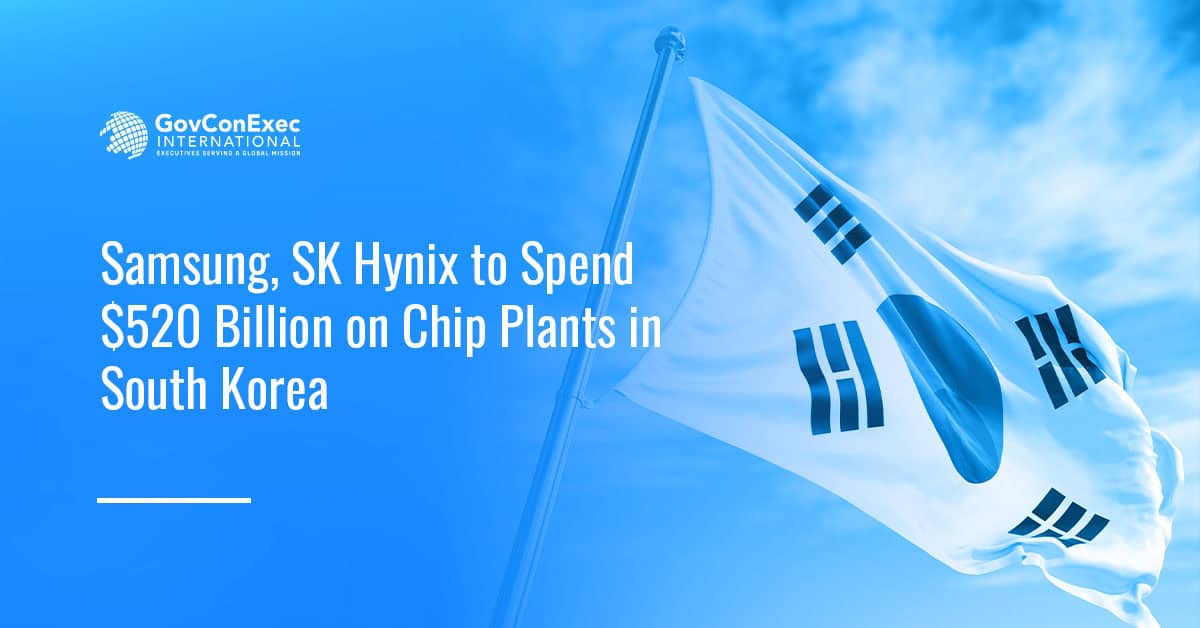
Samsung Electronics and SK Hynix, South Korea’s two largest chipmakers, plan to invest more than $500 billion in a new chip-manufacturing hub in the country’s southwestern region, in a government-backed initiative that pairs the AI-driven surge in memory chip demand with a national agenda to direct economic growth beyond Seoul.
What Is the Scale & Scope of the Investment?
Samsung Electronics and SK Hynix have each committed around 400 trillion won, approximately $260 billion apiece, to the southwestern hub, bringing the combined total to around $520 billion, the Wall Street Journal reported Monday. The plan envisions four new memory chip factories in the region, a significant departure from both companies’ existing production footprints, which are concentrated around Seoul. 
An additional 81 trillion won, roughly $53 billion, is earmarked for chip-packaging facilities in central South Korea. Samsung has identified the city of Gwangju as a likely site for its new plants.
Samsung and SK Hynix’s multibillion-dollar investment in AI-focused semiconductor manufacturing underscores the growing importance of advanced microelectronics in enabling next-generation defense capabilities. Learn how the Navy is leveraging AI, emerging technologies and resilient supply chains to strengthen national security by registering for the Potomac Officers Club’s 2026 Navy Summit on Aug. 27. Book your seats here.
Why Are Samsung & SK Hynix Making the Move Now?
Global demand for memory chips has accelerated sharply as AI systems have become increasingly dependent on high-capacity, high-speed memory. Both companies have acknowledged that their current production capacity falls short of what the market will require. Four major Silicon Valley hyperscalers, Microsoft, Meta Platforms, Amazon and Alphabet’s Google, together plan to direct as much as $670 billion toward AI-related capital expenditure this year alone, a figure that underscores the scale of demand facing chipmakers.
Chey Tae-won, chairman of SK Group, which controls SK Hynix, said the supply situation necessitates a fundamental expansion.
“A new manufacturing base is needed to meet the memory shortage that’s expected to continue,” Chey said. He added that the company is also fast-tracking construction of new memory plants in Yongin and Cheongju, cities closer to Seoul.
What Does South Korea’s Government Say About the Plan?
President Lee Jae Myung framed the initiative as a matter of national competitiveness and social equity, presenting it as central to his administration’s economic agenda.
“We must secure absolute competitiveness in advanced technologies including semiconductors and AI, and make sure the fruits of this growth are distributed evenly nationwide and felt by all citizens,” Lee said in a televised address.
Lee acknowledged that the southwestern location may not be the companies’ preferred choice from a purely commercial standpoint. “From the state’s perspective, however, balanced regional development is crucial,” he said, adding that the government would offer tax incentives and other support to make the arrangement viable for both firms.