
- Seven U.S. companies and organizations are now off-limits to Chinese businesses and individuals
- Drones and related technology bound for the U.S. face case-by-case licensing rather than streamlined review
- The measures run counter to the commitments China made in the November trade deal
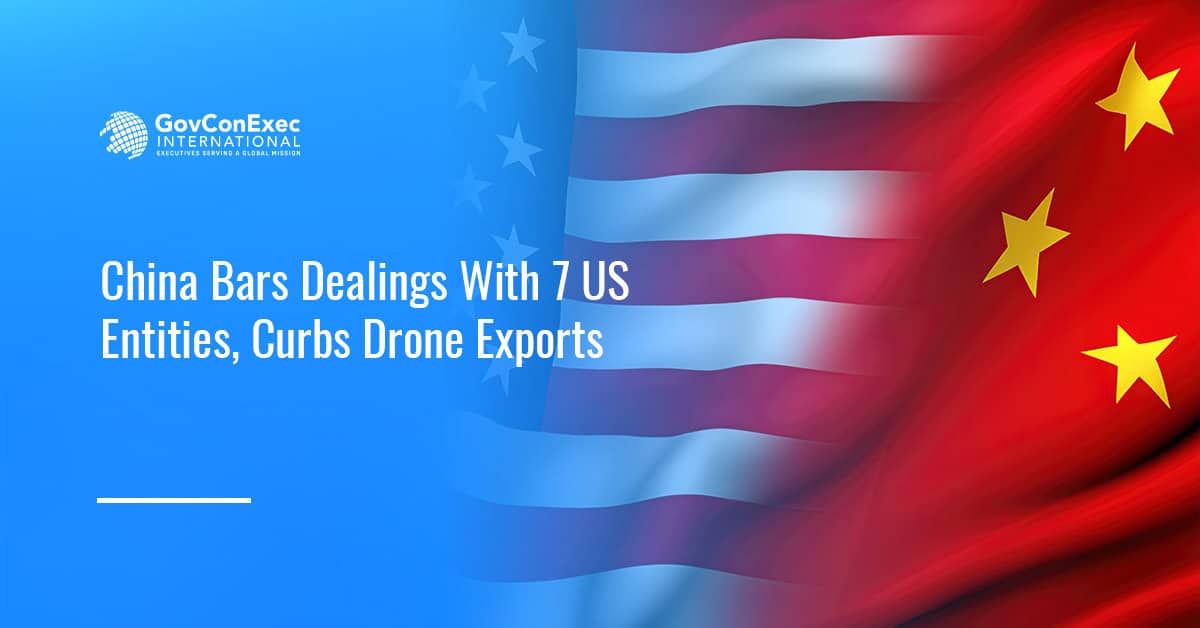
China’s Commerce Ministry has cut off seven U.S. entities from doing business with Chinese organizations and individuals, tightened licensing for drones headed to the United States, and barred U.S.-based agencies from conducting follow-up factory inspections under China’s certification regime. Reuters reported the measures Wednesday.
Beijing framed them as answers to recent U.S. restrictions, citing actions affecting Chinese telecom operators, testing laboratories, drones, consumer routers, submarine cables, robotics equipment and power inverters. It also pointed to more than 40 Chinese entities added to the U.S. Uyghur Forced Labor Prevention Act list.
Which U.S. Entities Did China Target?
Compliance Testing LLC, a Mesa, Arizona, firm, was singled out on different grounds than the other six. Beijing said the certification firm had backed U.S. Federal Communications Commission measures targeting China, without specifying how.
The remaining six were named over support for U.S. Xinjiang-related sanctions: Applied DNA Sciences, Stratum Reservoir, Altana Technologies, the Responsible Business Alliance, Verité Group and Human Rights in China. Several of the companies perform supply-chain tracing, labor-risk assessment or human-rights work.
The orders specify neither asset freezes nor travel bans, Reuters reported.
What Changes for Drone Exports?
Controlled drones, key components and associated technology shipped to the United States now go through a case-by-case review, losing access to streamlined licensing. Nothing in the measure constitutes a blanket prohibition, but shipments that fall under China’s dual-use export rules could face delays.
What Else Did Beijing Announce?
Suspending U.S.-based agencies from conducting follow-up inspections under China’s compulsory certification system is likely to add cost and time for manufacturers selling into the Chinese market.
The ministry also opened a national security investigation covering imported printing, copying and office equipment. That inquiry names no country and no company, though Beijing listed it among its responses to Washington.
How Do the Measures Compare With US-China Trade Commitments?
Several of the measures run counter to what China agreed to in November, when President Donald Trump and President Xi Jinping reached a trade and economic understanding in South Korea.
Under that deal, Beijing committed to lifting sanctions on certain American companies and ending investigations targeting the U.S. semiconductor industry. It also agreed to suspend export controls on rare earth elements, including gallium, germanium, antimony and graphite.
Washington’s side of the bargain included cutting tariffs on Chinese imports by 10 percentage points, extending Section 301 tariff exclusions through November and imposing a one-year suspension of certain export control measures tied to maritime and shipbuilding investigations.